
Dalton, Ga.-based TenCate, a manufacturer, distributor and installer of synthetic turf systems for sports and landscape applications, highlighted emerging sports surface research at the 2026 International Sports Engineering Association (ISEA) Conference.
Held June 1-4 at Washington State University in Pullman, Wash., the ISEA Conferences helps recognize researchers whose work is expanding the science behind turf, natural grass and field performance.
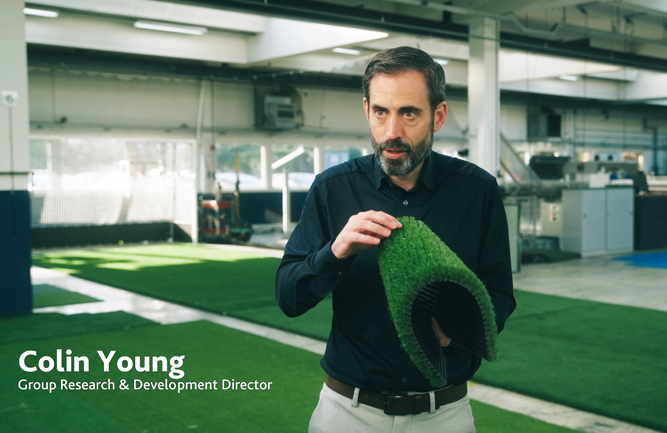
During the Sports Surfaces Session, Colin Young, Ph.D., the session’s chair and TenCate’s chief technical officer, presented awards honoring research that is advancing the understanding of synthetic turf materials, natural grass performance and the consistency of NFL playing surfaces.
“Research is essential to improving sports surfaces,” Young said. “When researchers and industry experts work together, we get a better understanding of how surfaces perform, where they can improve and how they can better support athletes.”
The Sports Surfaces Session focused on surface engineering, testing methods, athlete-surface interaction and sports surface performance.
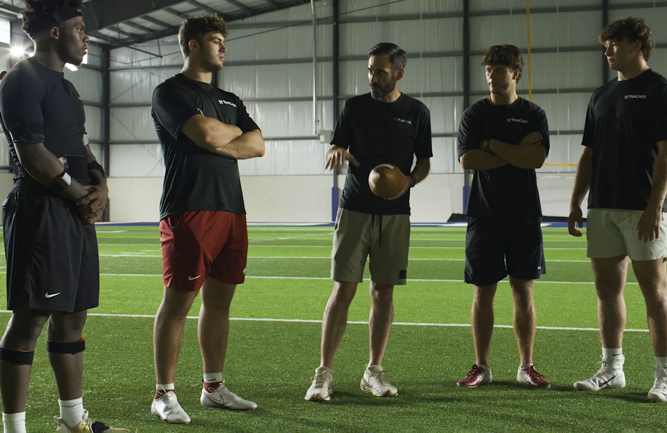
TenCate’s role in the Sports Surfaces Session reflects the company’s growing investment in sports surface research through its Center for Turf Innovation, where that work has helped inform the development of Pivot Performance Turf. The system was developed through years of research into how different surfaces perform, with a focus on creating a turf system that more closely replicates the feel and performance of natural grass. Biomechanical testing and athlete feedback guided the fiber design, providing natural traction, stability and grip, according to the company.
“Pivot is one example of how our research translates into an actual playing surface,” Young said. “ISEA gives us the opportunity to compare ideas with researchers and engineers who are advancing the science behind sports surfaces. That kind of exchange helps us keep improving how surfaces are designed and evaluated.”
Young said one of the important conversations in sports surface research involves moving beyond broad, simple comparisons between natural grass and synthetic turf and taking a closer look at the athlete and how the surface systems impact them.
“There is growing recognition that surfaces cannot simply be grouped together as ‘grass’ or ‘turf,’” Young said. “Different types of grass and turf behave differently depending on field conditions and many other variables. The more we understand and classify those differences, the better the research and the better the decision-making becomes.”
That focus on more precise classification was reflected in the research recognized during the Sports Surfaces Session. The awards recognized the following papers:
Award for research focused on turf: ”Compaction Behavior of Pine Chip Infill on Third Generation Artificial Grass Pitches and Its Effects on Surface Performance,” by Zach Morley, Paul Fleming and Steph Forrester of Loughborough University; and Tom Nott, Emma Coulson and Joseph Julian of Technical Surfaces Ltd.
Award for research focused on grass: “Traction of sod for NFL use differs by turfgrass species and production method,” by Philipe Aldahir, E. Meade Spratley and Cody O’Cain of UMS BioCore; Evan Mascitti of the University of Massachusetts Amherst; Andrew McNitt of Pennsylvania State University; Kristy Arbogast of Children’s Hospital of Philadelphia; John Sorochan of the University of Tennessee at Knoxville; and Laura Schmitt of The Ohio State University.
Award for research focused on testing and implementation: “Spatial consistency of National Football League game fields using player-informed traction and impact testing,” by many of the same researchers, including Aldahir, Mascitti, Spratley, O’Cain, McNitt, Arbogast, Sorochan and Schmitt, along with Nicholas Pappas of the National Football League.
The award-winning research reflects the growing emphasis on understanding how different surfaces perform under real-world conditions, a focus that has also shaped TenCate and its own research and product development efforts.
“ISEA is where research, engineering and practical application meet,” Young said. “That exchange is important because better science leads to better surface design. The more precisely we understand how surfaces perform, the better we can build systems that feel natural, stay consistent and support athletes throughout training and competition.”